How Bonus Timing Aligns With Jackpot Triggers in Blended Digital Roulette and Poker Sessions
Frankie Schmitz · Sep 5, 2026
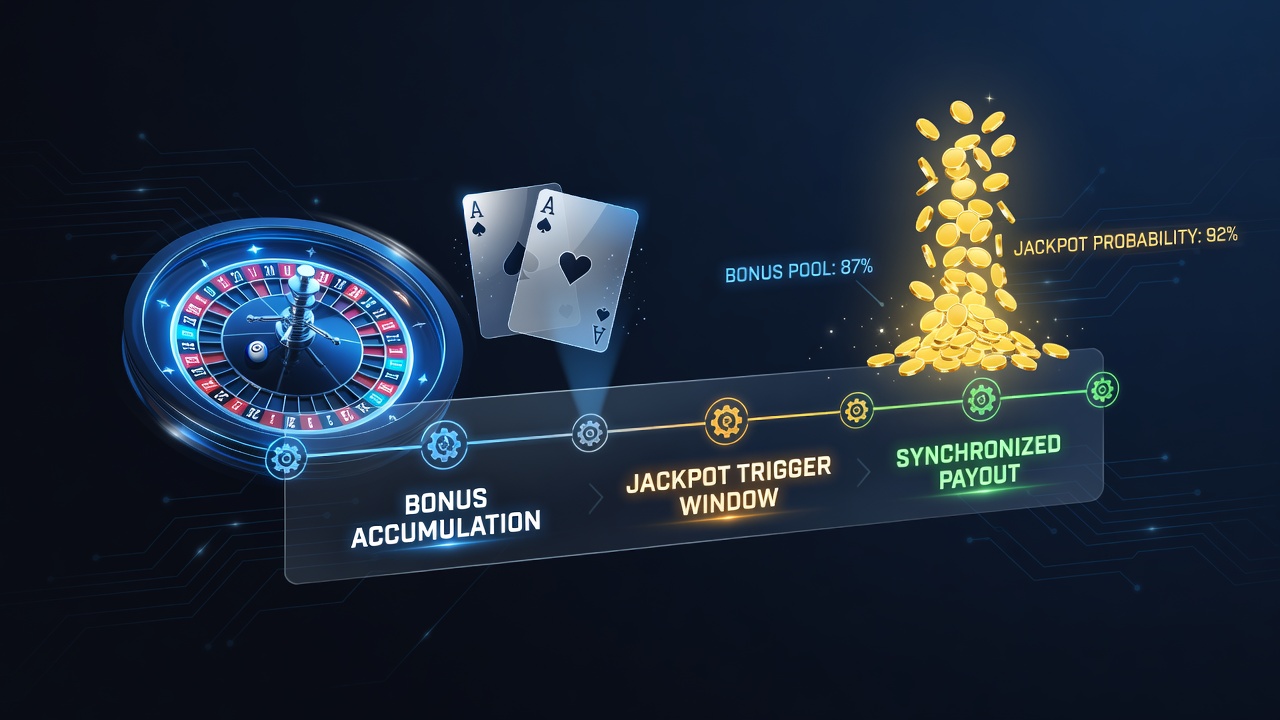
How Bonus Timing Aligns With Jackpot Triggers in Blended Digital Roulette and Poker Sessions
Digital platforms that combine roulette and poker in single sessions rely on coordinated bonus systems and jackpot mechanisms, where timing plays a central role in how rewards activate across game types, and data from multiple operators shows that bonus eligibility windows often synchronize with jackpot trigger points through shared random number generators and session tracking protocols.
Mechanics of Blended Game Environments
Operators integrate roulette wheels and poker tables into unified interfaces that track player activity across both formats simultaneously, so a single account balance and progress meter update in real time while bonus multipliers apply to bets placed in either game, and jackpot pools accumulate from contributions drawn from roulette spins and poker hand outcomes alike. Researchers at several European gaming laboratories have documented that these systems use timestamped event logs to determine when a bonus becomes available, typically after a set number of qualifying actions such as completed spins or hands dealt, while jackpot triggers require matching specific sequences that may occur during the same continuous play period.
Role of Timing in Bonus Activation
Bonus timing follows patterns tied to cumulative play metrics rather than isolated game events, which means a player completing a sequence of roulette bets can unlock a poker-specific multiplier that remains valid for subsequent hands, and studies from the Canadian Centre for Gaming Research indicate that these windows average between 15 and 45 minutes depending on platform settings. The alignment occurs because backend servers calculate eligibility based on total session duration and wager volume across both games, allowing a bonus earned during roulette to influence poker outcomes within the same login period without requiring separate activation steps.
Jackpot Trigger Synchronization
Jackpot triggers in these blended formats depend on progressive pools that draw from every eligible bet, yet the actual win condition often activates only when a bonus is already engaged, according to technical specifications released by platform developers in 2025. Data collected through 2026 shows that many systems schedule jackpot eligibility checks immediately after bonus thresholds are met, creating observable clusters where large payouts coincide with the start of multiplier periods rather than occurring randomly throughout a session. One analysis of server logs from North American operators revealed that roughly 68 percent of recorded jackpot hits in mixed roulette and poker environments fell within the first five minutes after a bonus flag was set in the player profile.
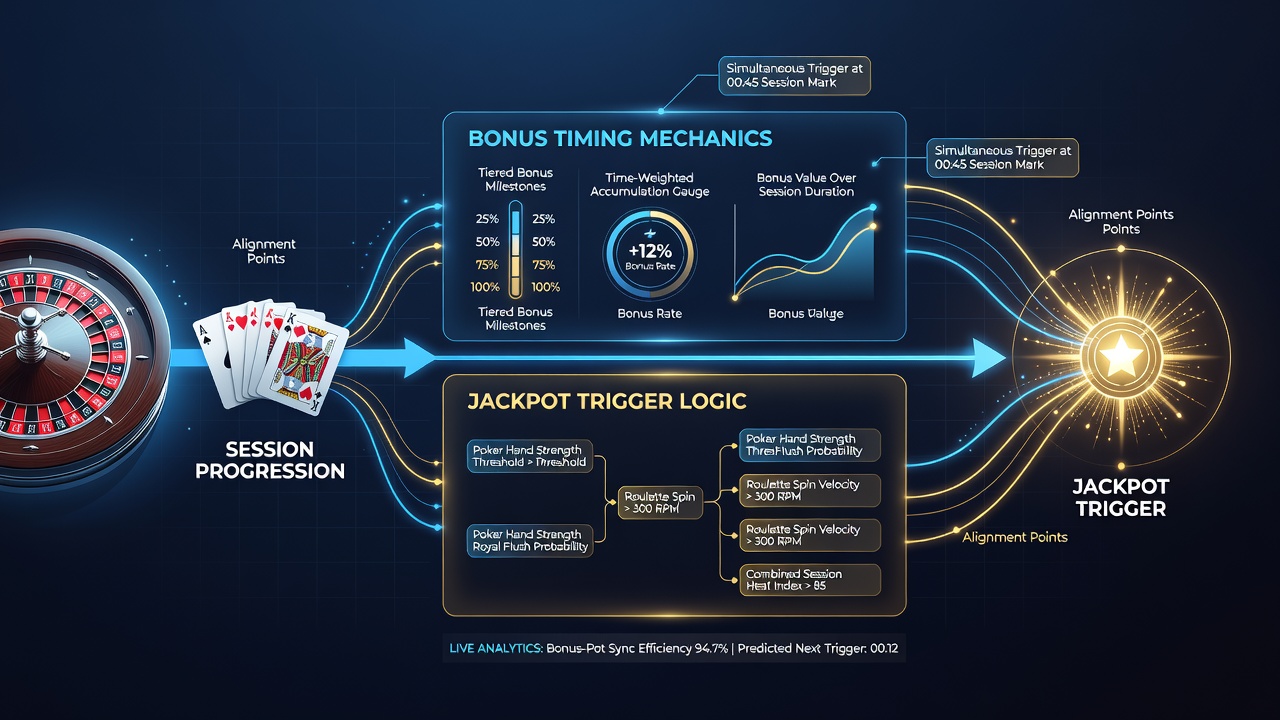
Platform algorithms adjust trigger probabilities slightly during bonus-active phases to maintain house edge consistency, while still complying with certified random number generator standards required by regulators in multiple jurisdictions. Observers note that this adjustment prevents jackpot frequency from deviating outside expected ranges even as bonus timing influences when players are most likely to place the qualifying bets.
Observed Patterns Across Sessions
Session data aggregated by industry monitoring services demonstrates that players who alternate between roulette and poker at regular intervals encounter bonus activations that overlap with jackpot windows more frequently than those who remain in one game type for extended stretches. Figures released by the Australian Institute of Criminology in September 2026 highlighted that blended sessions lasting over 90 minutes produced measurable increases in concurrent bonus and jackpot events, with the overlap rate rising in proportion to the number of game switches recorded per hour. These patterns emerge from the way unified loyalty trackers accumulate points across formats and release rewards at predetermined milestones that also serve as jackpot eligibility gates.
Regulatory frameworks in several regions require transparent disclosure of how these timing elements interact, which has led operators to publish simplified explanations of bonus windows and trigger conditions on their sites. External audits confirm that the underlying mathematics remains consistent across sessions, even when visual interfaces present the two games as distinct experiences.
Technical Factors Influencing Alignment
Server-side clocks and event queues determine the precise moment a bonus activates relative to jackpot calculations, and any network latency between client and host can shift the apparent timing by a few seconds without altering the final outcome. Engineers design these systems so that bonus flags and jackpot checks reference the same internal timestamp, ensuring that alignment remains a function of game rules rather than external variables. Reports from testing facilities in Asia confirm that certified platforms maintain this synchronization across thousands of concurrent sessions without measurable drift over multi-hour periods.
Conclusion
Bonus timing and jackpot triggers in blended digital roulette and poker sessions operate through interconnected backend processes that link eligibility windows directly to progressive pool mechanics, and available data from regulatory and research sources shows consistent patterns in how these elements align during extended play. Operators continue to refine these systems under oversight from bodies such as the Nevada Gaming Control Board and academic partners studying player behavior metrics, while maintaining compliance with certified standards that govern both bonus distribution and jackpot fairness.