Regional Variations in Jackpot Distribution Across Integrated Poker and Table Game Platforms
Sofia Ludwig · Oct 31, 2026
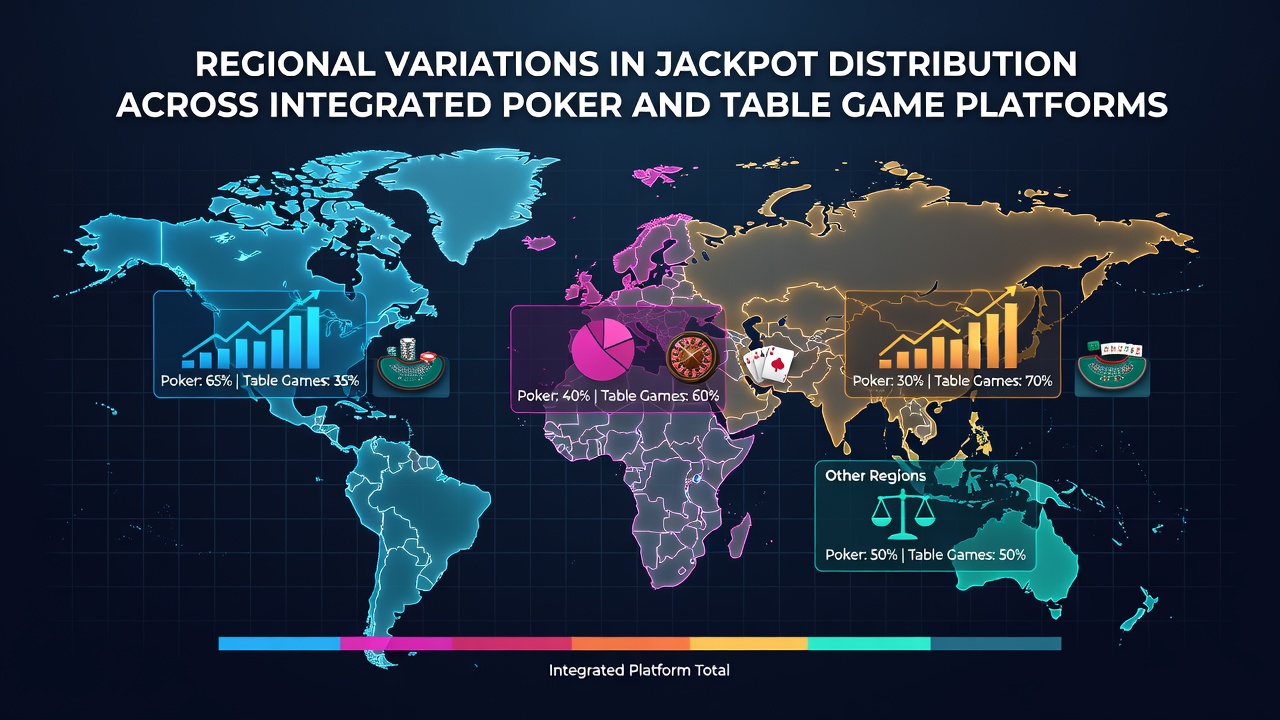
Regional Variations in Jackpot Distribution Across Integrated Poker and Table Game Platforms
Data from integrated gaming platforms reveals distinct patterns in how jackpots accumulate and pay out when poker and table games combine under single progressive systems, and these patterns shift noticeably by region because of local regulations, player bases, and platform designs. In October 2026 analysts tracked contributions from blended sessions where poker hands fed into shared pools alongside blackjack and roulette outcomes, creating cross-game accumulations that differed from standalone slot progressives.
North American Patterns
Platforms operating under Nevada and New Jersey licenses show higher average jackpot values in integrated setups, since state rules allow larger seed amounts and permit contributions from both live dealer table games and video poker terminals to feed the same meter. Observers note that a single progressive pool can draw from thousands of daily poker tournaments and table sessions, which leads to slower but larger payouts compared to regions with tighter caps. Figures released by the Nevada Gaming Control Board indicate that combined poker and table game jackpots in this area reached trigger points roughly every 14 days during the first three quarters of 2026.
European and Asian Differences
European jurisdictions apply contribution limits that cap the percentage taken from each wager, which results in more frequent but smaller distributions across integrated poker and table platforms. Data from operators licensed in Malta and Gibraltar shows average jackpot values remaining under €500,000 even after months of accumulation, while Asian markets such as those in Macau and Singapore permit higher contribution rates yet impose strict player eligibility rules that slow pool growth. Researchers at the University of Macau documented how these regional caps create distinct payout rhythms, with European systems triggering wins multiple times per month and Asian platforms seeing rarer but larger single awards.
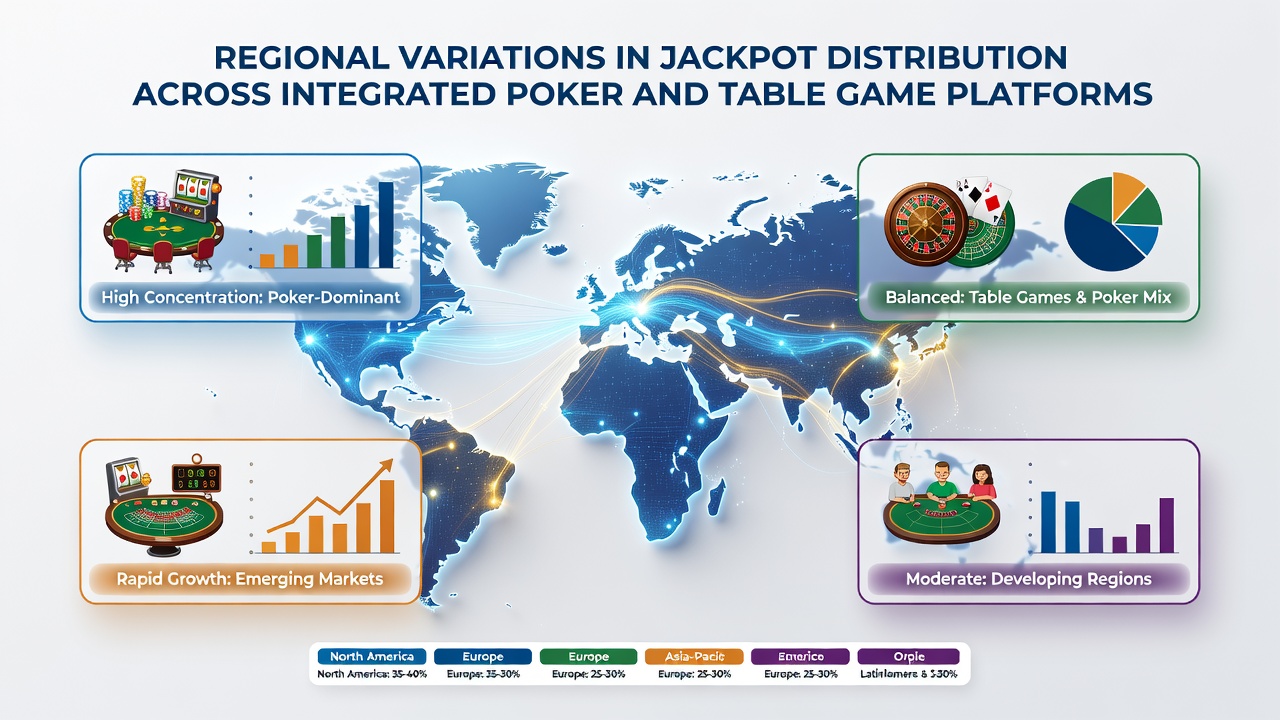
Platform Integration Mechanics
Integrated systems link poker tables to table game terminals through centralized servers that calculate contributions in real time, and regional licensing affects how quickly meters update when a poker all-in triggers an additional percentage toward the shared pool. In jurisdictions where live dealer pacing influences contribution speed, platforms adjust seed resets differently, with North American operators often resetting to higher base amounts after each payout while European platforms favor lower seeds to maintain frequent activity. Case studies from major providers show that these mechanics produce measurable differences in player engagement metrics, although the underlying algorithms remain consistent across borders.
Regulatory Influences on Distribution
Regulatory frameworks shape jackpot behavior more than platform technology alone, and October 2026 reports highlighted how Australian state rules require separate pools for poker and table games even when hosted on the same software, preventing true integration and resulting in smaller individual jackpots. Canadian provincial regulators, by contrast, allow cross-game pooling under strict audit conditions, which produces distribution patterns closer to those seen in the United States. Industry data from the Canadian Gaming Association illustrates that provinces permitting blended progressives recorded 22 percent higher average payouts than those maintaining separation.
Conclusion
Regional variations in jackpot distribution across integrated poker and table game platforms stem primarily from licensing requirements, contribution caps, and player volume differences rather than from the core technology itself. Platforms continue to adapt their reset values and contribution percentages to align with local rules, which produces the observable differences in payout frequency and size documented throughout 2026. Continued monitoring by regulatory bodies and academic researchers will clarify whether these patterns stabilize or shift further as more jurisdictions refine their oversight of combined gaming formats.