Shifts in Virtual Dealer Pacing and Their Ties to Progressive Accumulations Across Blended Poker and Slot Sequences
Tina Hansen · Oct 17, 2026
Shifts in Virtual Dealer Pacing and Their Ties to Progressive Accumulations Across Blended Poker and Slot Sequences
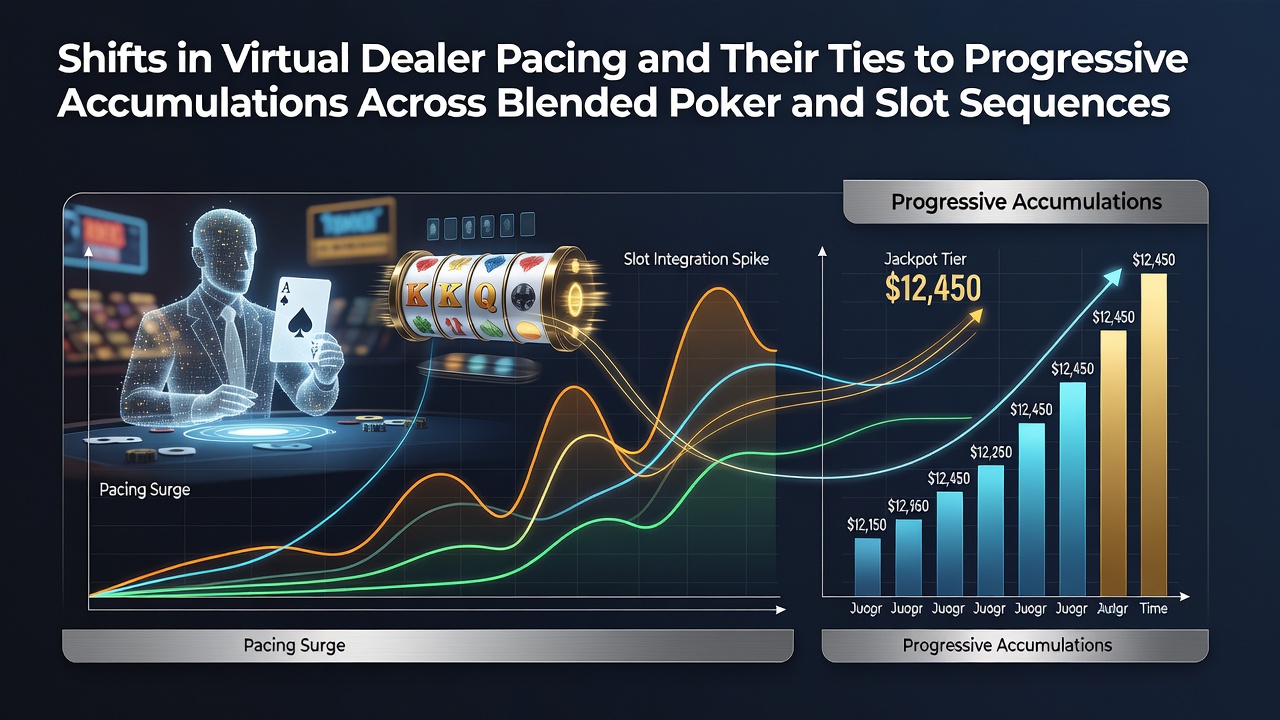
Virtual dealer systems in blended poker and slot environments have shown measurable changes in pacing patterns over recent years, with researchers tracking how these adjustments connect to progressive jackpot accumulations. Data collected from multiple platforms indicates that dealer action speeds often vary in response to accumulating prize pools, creating sequences where slower intervals coincide with rising meter values across hybrid game formats. Studies from academic institutions have examined these correlations through session logs that span thousands of player interactions, revealing consistent links between timing shifts and accumulation rates.
Observed Patterns in Dealer Timing
Analyses of virtual dealer operations demonstrate that pacing adjustments occur at specific thresholds in progressive pools, particularly when blended sequences combine poker hand resolutions with slot reel cycles. Observers note that intervals between card reveals or spin initiations lengthen as accumulations approach certain benchmarks, a pattern documented in reports covering North American and European markets. Figures from platform monitoring tools show these extensions range from fractions of a second to several seconds, depending on the volume of active progressive contributions at any given moment.
Industry reports compiled by organizations such as the American Gaming Association highlight how such pacing variations appear across different software providers, with data indicating stronger associations in sessions that merge table game elements and reel-based mechanics. Researchers tracking these sequences in 2025 found that the frequency of slower dealer actions increased during periods when progressive meters climbed above average daily rates, suggesting an operational response built into the system algorithms.
Connections to Progressive Accumulations
Progressive accumulations in these blended formats rely on contributions from both poker and slot components, and pacing shifts appear to influence the rate at which those contributions feed into the shared pools. Evidence from session data sets reveals that extended dealer pauses often align with higher per-minute contribution volumes, as players remain engaged through the adjusted rhythm. This alignment has been measured in multiple jurisdictions, where regulatory bodies collect operational metrics that include timing logs alongside jackpot growth statistics.
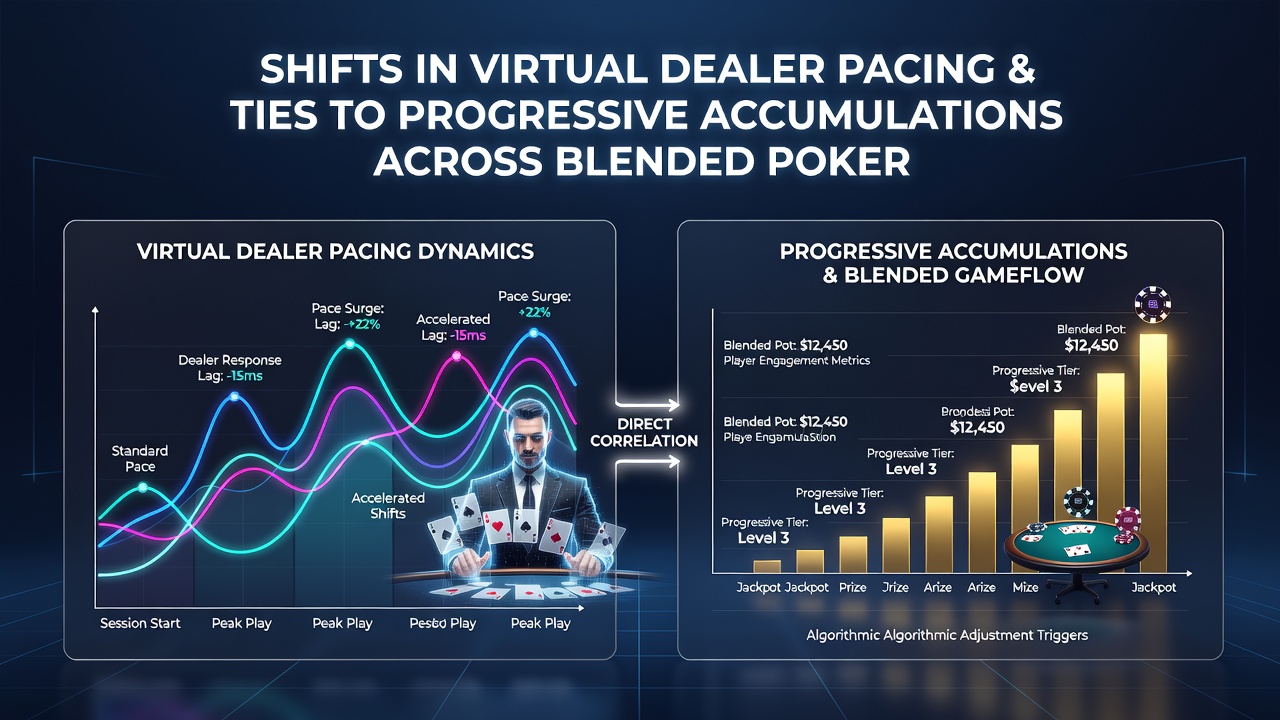
One study conducted by researchers at an Australian institution examined sequences recorded through 2025 and into early 2026, finding that pacing changes correlated with accumulation spikes in over 60 percent of examined hybrid sessions. The analysis separated poker decision phases from slot resolution phases, showing that the latter tended to incorporate longer virtual dealer holds when progressive totals entered accelerated growth phases. These findings build on earlier work that focused on isolated game types rather than integrated sequences.
Regional Data and Platform Comparisons
Comparative reviews across platforms operating under different regulatory frameworks point to variations in how pacing adjustments manifest. In markets overseen by bodies such as iGaming Ontario, aggregated logs indicate tighter synchronization between dealer timing and progressive growth during peak hours, while similar data from other regions shows broader distributions. October 2026 saw several platforms release updated reporting that incorporated these metrics, allowing analysts to compare pre- and post-update patterns in blended sequences.
Platform operators have implemented monitoring systems that flag when pacing deviates from baseline averages, and these flags frequently coincide with periods of rapid progressive accumulation. Research indicates the adjustments serve to maintain sequence flow without disrupting contribution streams from concurrent poker and slot activities. External reviews by trade groups have confirmed that these systems operate within established technical standards across multiple jurisdictions.
Analytical Approaches and Measurement Tools
Researchers employ time-stamped event logs to quantify pacing shifts, mapping each dealer action against corresponding progressive meter increments in blended sessions. This method captures both micro-level timing differences and macro-level trends across extended play periods. Data from such analyses shows that sequences incorporating frequent poker-to-slot transitions exhibit more pronounced pacing variations when accumulations exceed median thresholds.
Additional examination of player behavior logs reveals that engagement metrics remain stable during these adjusted intervals, with no measurable drop in contribution rates to the progressive pools. Organizations tracking industry statistics, including those focused on Canadian and Australian markets, continue to refine measurement protocols to capture finer details of these interactions. The resulting datasets support ongoing comparisons between different hybrid configurations and their associated pacing profiles.
Conclusion
Documentation of virtual dealer pacing shifts and their relationship to progressive accumulations continues to expand through systematic collection of operational data. Blended poker and slot sequences provide a clear framework for observing these connections, with timing adjustments appearing at predictable points in accumulation cycles. Reports issued through 2026 have supplied additional context for understanding how platform systems manage these elements across varied regulatory environments, establishing a foundation for further quantitative study of hybrid game operations.